Latest

Showing posts with label Politics. Show all posts

Wednesday, 25 October 2017

FBI Releases 1,500 Pages of Documents on 2012 Sandy Hook Elementary School Massacre

HARTFORD, Conn. — The FBI on Tuesday released more than 1,500 pages of documents related to its investigation into the 2012 Sandy Hook Elementary School shooting that left 20 first-graders and six educators dead.
The documents include reports by FBI agents who interviewed people about the shooter, Adam Lanza, who killed himself as police arrived at the school. Large portions of many of the documents were redacted, including the names of the people who spoke to the agents.
 Senate abolishes Sandy Hook gun rule to keep guns from the mentally ill 2:25
The documents offer a window into the early days of the investigation, as agents chased false leads and gathered evidence of Lanza's isolation. A year after the massacre, state police released a final investigative document that concluded Lanza was obsessed with firearms, death and mass shootings, but that the motive may never be known.
One person told an FBI agent that Lanza's mother, Nancy, had become concerned about him a month before the shooting because he had become a "shut in" who hadn't gone anywhere in three months. Adam Lanza shot his mother to death in their home before going to the school on Dec. 14, 2012.
Image: Multiple deaths reported in US elementary school shooting
Police officers evacuate children from the Sandy Hook Elementary School in Newtown, Connecticut, on Dec. 14, 2012. SHANNON HICKS / Newtown Bee via Polaris Images file
The person also told the FBI agent that Lanza never completely accepted that he had Asperger's syndrome, a condition on the autism spectrum, and never took any of the medication he was prescribed.
Related: Sandy Hook Conspiracy Theorist Gets Prison Time for Death Threats
"Nancy would take care of all of Adam's needs," the person said. "However, she never cleaned his room, nor was allowed in his room. Adam's room was his personal space that no one else was allowed into."
A report by the Connecticut child advocate in 2014 concluded that Lanza's autism spectrum disorder and other psychiatric problems did not cause or lead directly to the massacre. The report said Nancy Lanza rejected recommendations from Yale psychologists that her son be medicated and undergo rigorous treatment as a child for anxiety and other conditions. It also said Adam Lanza, his parents and educators contributed to his social isolation by not confronting his problems.
Image: Adam Lanza
Adam Lanza is seen in this photo obtained and distributed by NBC News. NBC News file
Another person told the FBI that Lanza essentially had become a "recluse" who shut himself in his bedroom and played video games all day. The person said Lanza had no friends, was computer savvy and became very interested in firearms.
Lanza shot the children and educators with an AR-15-style rifle that was legally purchased by his mother, who took her son to shooting ranges, authorities have said.
Related: Daughter of Sandy Hook Victim Demands Donald Trump Disown Alex Jones
A Newtown resident told the FBI that Nancy Lanza said Adam had once hacked into a government computer system and federal authorities — either FBI or CIA agents — showed up at their door.
Nancy Lanza told the person that she had to convince the agents that her son was just very intelligent and was challenging himself to see if he could hack into a government system. She said agents told her that if Adam was that smart, he could get a job with their agency someday.
Several Newtown residents told authorities they received death threats after the shooting during phone calls from someone identifying himself as Adam Lanza.
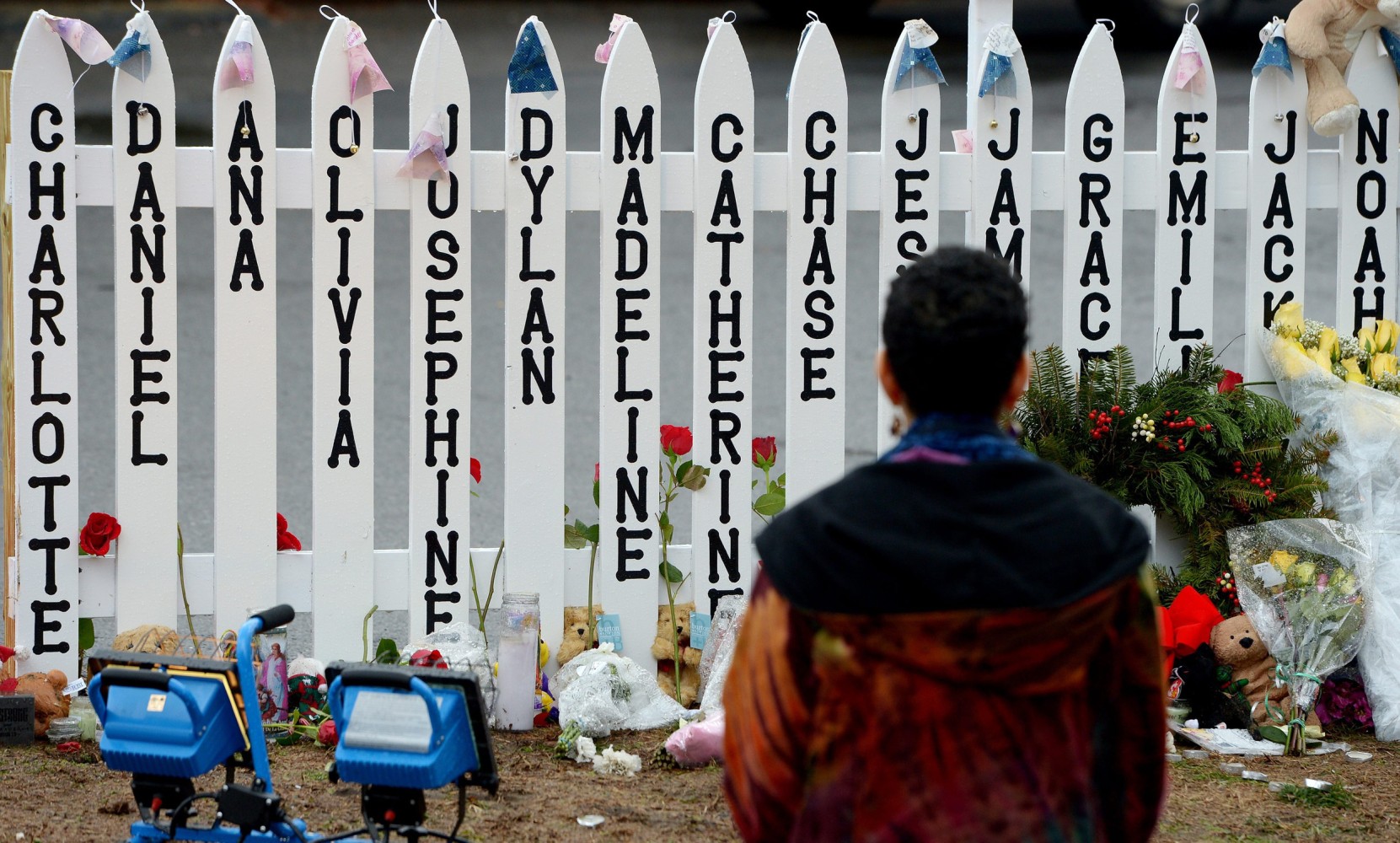
Image: One week anniversary of shooting at elementary school in Newtown, Connecticiut
A woman kneels in front of a fence with the names of the 20 children killed at the Sandy Hook Elementary School in Newtown, Connecticut, USA, 21 December 2012. JUSTIN LANE / EPA file

Cubans Forcefully Reject Blame for U.S. Diplomats’ Mystery Ailments

HAVANA — In an exclusive interview with NBC News, Cuban officials forcefully denied that their government was to blame for the mysterious ailments that have afflicted two dozen American diplomats and plunged relations with the U.S. into crisis.
President Donald Trump has publicly blamed the government in Havana for the reported symptoms, which range from hearing loss and nausea to memory problems and mild traumatic brain injury. But the Cubans leading the probe emphatically rejected that.
"I can guarantee you that this is completely false," Col. Ramiro Ramirez, chief of diplomatic security for the Cuban Interior Ministry, told NBC News in an exclusive interview.
U.S. officials believe some kind of sonic weapon was used to attack two dozen embassy staffers and relatives between the fall of 2016 and this August, but the Cubans claim they don't even have that technology — and U.S. experts say they don't know of technology that would produce the reported symptoms.
"Cuba has never produced these type of weapons," said Lt. Col. Jorge Alazo, head of the criminal division of the Interior Ministry.
The State Department pulled 60 percent of its workers out of the embassy in Havana three weeks ago and soon after expelled 15 Cuban diplomats from Washington, or nearly two thirds of Cuba's D.C. staff.
Secretary of State Rex Tillerson said the "decision was made due to Cuba's failure to take appropriate steps to protect our diplomats."
The Cubans, who took the extraordinary step of inviting the FBI to Havana when the U.S. first reported the incidents, said they are doing everything they can to figure out what is behind the ailments.
"This investigation has involved nearly 2,000 people," said Ramirez, "including law enforcement agents and the best scientists in our country."
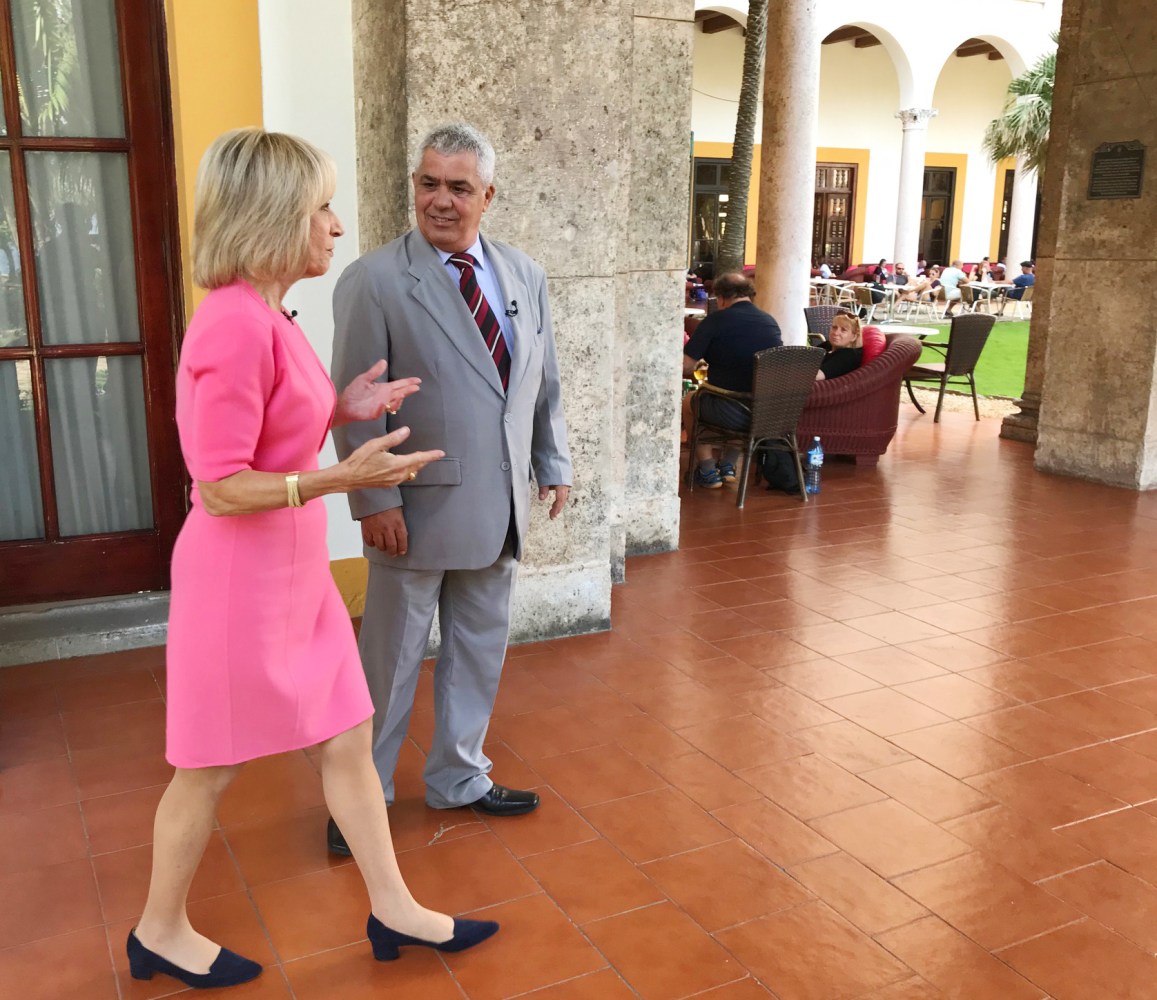
Image: Andrea Mitchell interviews a Cuban doctor
Dr. Manuel Villar tells Andrea Mitchell that Cuban investigators have not found anyone else suffering the symptoms reported by U.S. diplomats. NBC News
They have examined rooms in two hotels where American embassy staffers lived, scoured a neighborhood where many had homes, interviewed 300 neighbors, and conducted dozens of medical exams to see if others outside the diplomatic cadre were affected.
"Not even one person was sick," said Dr. Manuel Villar. He noted, however, that the U.S. has refused to share the medical records of the diplomats or let the Cubans speak to U.S. doctors. The Cubans also say the State Department has not permitted them into the homes of U.S. diplomats to conduct tests.
The Cubans also analyzed air and soil samples, looked into whether insects could be the culprit and considered a range of toxic chemicals and the possibility of electromagnetic waves, the officials said.
But from the Cuban perspective, nothing so far has explained why U.S. diplomats began suffering health symptoms, some of them after what have been described as acoustic disturbances.
"We've been unable to find anything to prove this situation exists or ever existed," Alazo said.
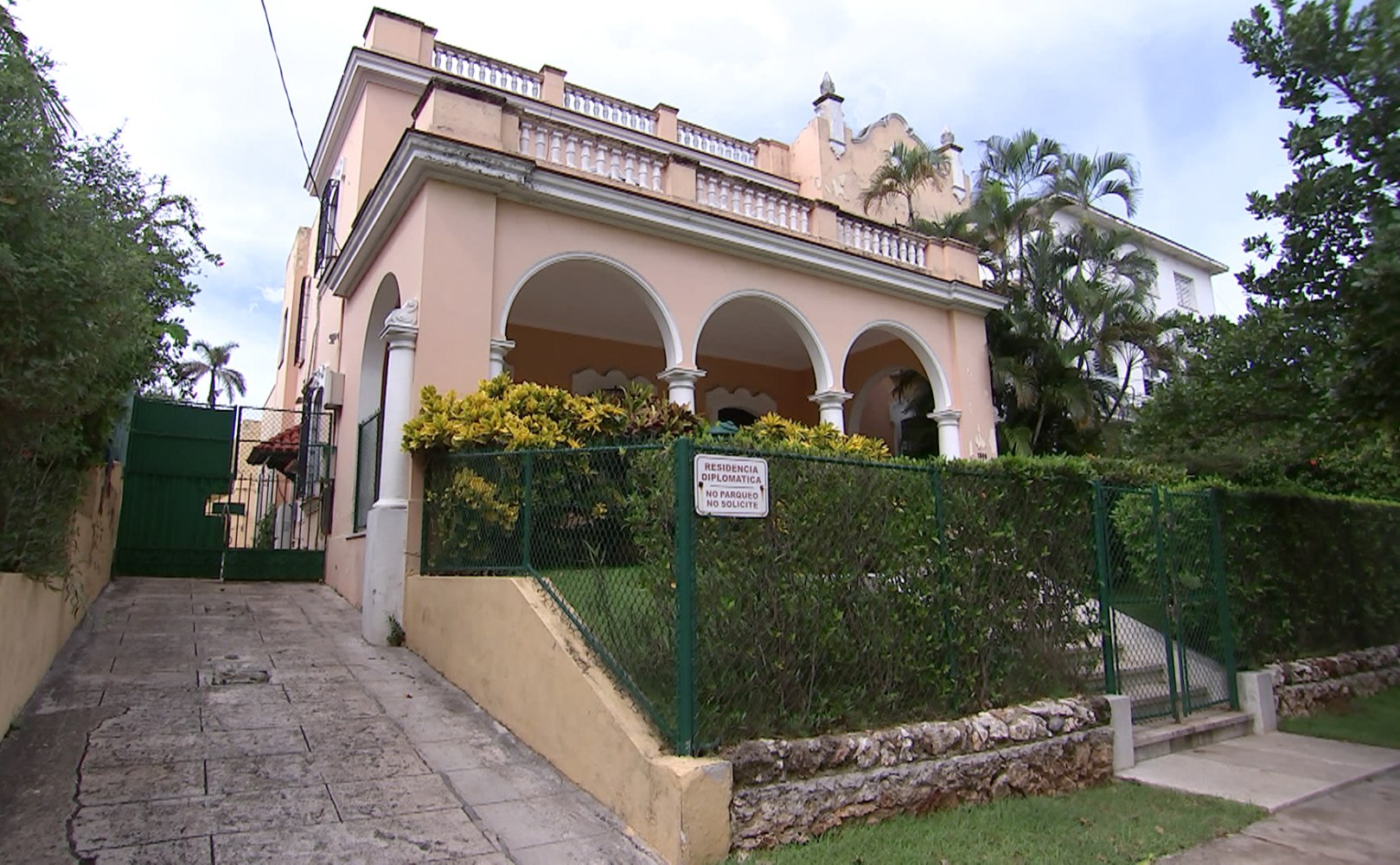
Image: A sickened U.S. diplomat lived in this Havana home
A sickened U.S. diplomat lived in this Havana home. NBC News
There is audio of the strange, high-pitched sounds that some of the diplomats reportedly heard, but a document provided to NBC News by the Cubans says the recording did not capture "acoustic levels damaging to health."
And American experts said they know of no technology that would explain the symptoms.
"There's never been any kind of physiological response that reflects the symptoms that have been reported that has ever been caused by sound waves of any type," said Joe Pompei, a former MIT researcher who is the founder and president of Holosonics, a sound technology company.
"Unless they had transducers in the bathtub and had the diplomats submerge their heads for a long time, it's just not possible," Pompei added.
Despite Cuba's intense investigation and impassioned disavowals, the episode has frayed relations with the United States just two years after the Obama administration restored ties.
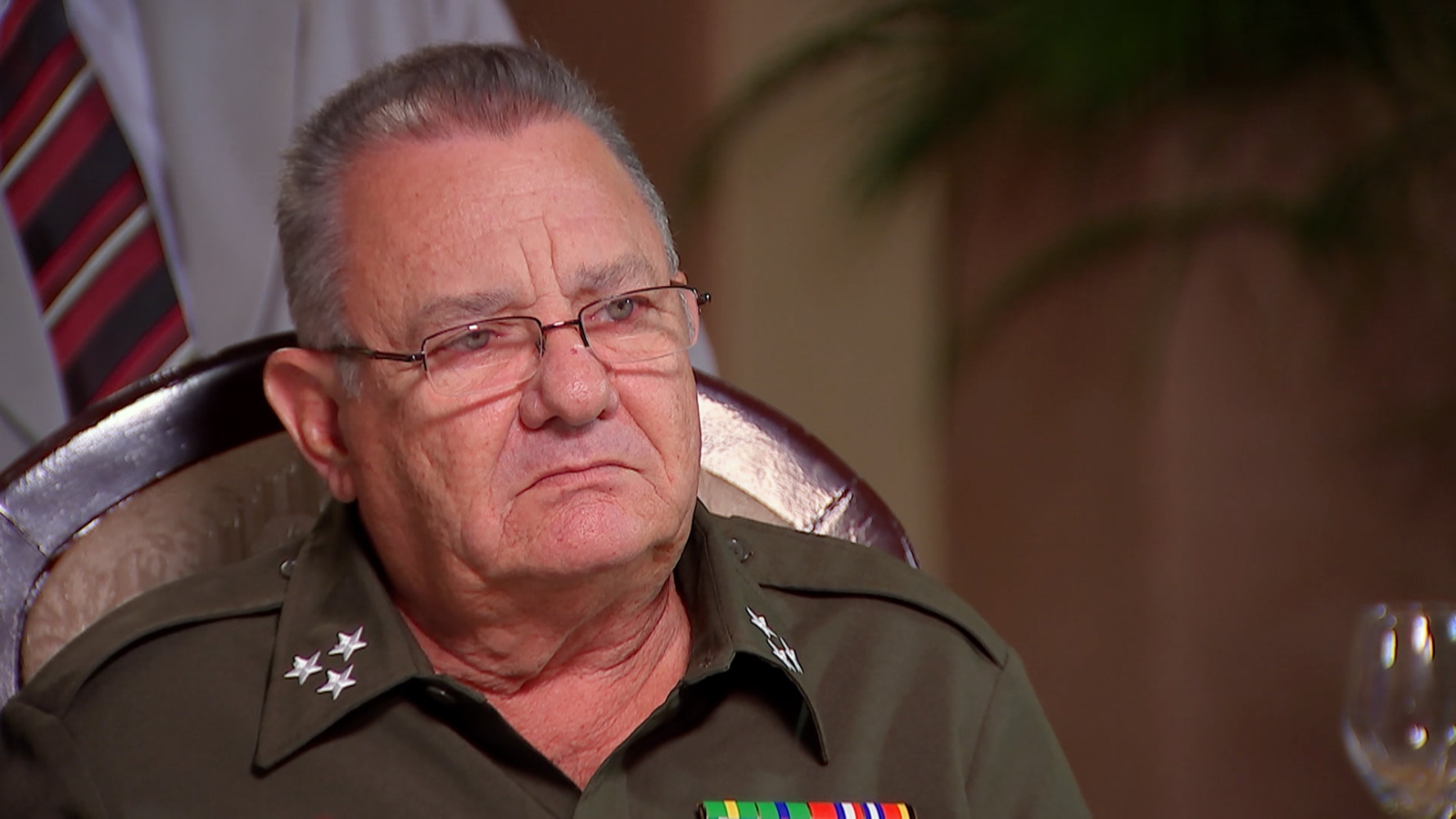
Image: Cuban Lt. Col. Ramiro Ramirez speaks about the suspected sonic attacks that sickened American diplomats
Cuban Col. Ramiro Ramirez says any suggestion Havana is behind the attacks is "completely false." NBC News
In a classified briefing for members of Congress, administration officials did not point a finger at Cuba, U.S. officials said. But Trump has cast blame in that direction at least twice.
"They did some bad things," he said in late September as the State Department began its drawdown of personnel. Two weeks later, he told reporters, "I do believe Cuba is responsible. I do believe that."
In Havana, Cuban officials dismiss speculation that hardliners on the communist island orchestrated attacks in an attempt to freeze the defrosting of relations between the two countries.
As for the possibility that a third country, like Russia, wanted to cause trouble, Ramirez said, "We don't have definitive answers yet but Cuba has never allowed, nor would we ever allow, our territory to be used in this way."
 New audio reveals what diplomats allegedly heard in Cuba 'sonic attack' 1:59
The FBI has met with the Cubans this week to discuss the situation. Cuba says that despite the war of words, it's hoping for more cooperation that could unravel the mystery.

Wednesday, 18 October 2017

How Trump handled four dead soldiers

How Trump handled four dead soldiers

Washington - On October 4, the day that four US Special Forces soldiers were gunned down at the border of Niger and Mali in the deadliest combat incident since President Donald Trump took office, the commander in chief was lighting up Twitter with attacks on the "fake news" media.

The next day, when the remains of the first soldiers reached Dover Air Force Base in Delaware, Trump was assailing the "fake news" and warning the country of "the calm before the storm." What storm, he never did say.

Over that weekend, as the identity of the fourth soldier was disclosed publicly and more details emerged about the incident, Trump was golfing and letting it rip on Twitter about Senate Foreign Relations Committee Chairman Bob Corker, R-Tenn., the NFL, North Korea, Puerto Rico and, again, alleged media bias.

But a president who revels in providing colour commentary on the news said nothing about what happened in Niger for 12 straight days - until Monday in the Rose Garden of the White House, where he was asked by a reporter to explain his uncharacteristic silence.

In his answer, Trump said in his defence that he had written personal letters to their surviving family members and then tried to use the issue to gain a political advantage. Trump leveled a series of false accusations his predecessors, including former president Barack Obama, saying they never or rarely called family members of soldiers who were killed on their watch, when in fact they regularly did both.

As anger swelled, Trump continued to attempt to bolster his broader claim on Tuesday by invoking the death of Marine 1st Lt. Robert Kelly, the son of current White House chief of staff John Kelly who was killed in 2010 while serving in Afghanistan.

White House officials have not explained why Trump took so long to comment publicly about the Niger ambush, but said Tuesday that he was regularly briefed on the incident during that period. They declined to provide details.

The White House did not receive from the Defense Department detailed information about the four dead soldiers until October 12, and that information was not fully verified by the White House Military Office until Monday, according to a senior White House official, who spoke on the condition of anonymity to speak about the internal process.

At that point, this official said, Trump was cleared to reach out to the four families - both in letters that were mailed Tuesday and in personal phone calls to family members on Tuesday.
"He offered condolences on behalf of a grateful nation and assured them their family's extraordinary sacrifice to the country will never be forgotten," White House press secretary Sarah Huckabee Sanders said.

In his call with Sgt. La David Johnson's widow, Myeshia Johnson, Trump told her, "He knew what was signing up for, but I guess it hurts anyway," according to the account of Republican Frederica Wilson, D-Fla., who was riding in a limousine with Johnson when the president called and heard the conversation on speakerphone.

Wilson recalled in an interview with The Washington Post that Johnson broke down in tears. "He made her cry," Wilson said. The congresswoman said she wanted to take the phone and "curse him out," but that the Army sergeant holding the phone would not let her speak to the president.

The White House neither confirmed nor denied Wilson's account. "The President's conversations with the families of American heroes who have made the ultimate sacrifice are private," a White House official said in a statement.

Leon Panetta, who served as defense secretary and White House chief of staff under Democratic presidents, said Trump should have more quickly conveyed the "deepest regrets of the country for the families that lost their loved ones." He put some of the responsibility for Trump's slow response on his staff.

"Somebody screwed up here, OK?" Panetta said. "You don't let that amount of time pass when our men and women in uniform have been killed."

Trump did not serve in the military - he sought and received several draft deferments during the Vietnam War - and has drawn pointed criticism in the past for his comments about military heroes.

As a presidential candidate, Trump mocked the service of Sen. John McCain, R-Ariz., a prisoner of war in Vietnam, and feuded with the Gold Star parents of Army captain Humayun Khan, who was killed in Iraq in 2004.

And on his first full day as president, Trump used a speech before the Central Intelligence Agency's wall of stars honouring intelligence officers who died in service to air his personal grievances, including over media coverage of the size of his inaugural crowd.

Peter Wehner, an adviser and speechwriter in former president George W. Bush's White House, said communicating empathy and compassion has been for Trump like speaking "a foreign language".

"Part of being a president is at moments being pastor in chief, dispensing grace and understanding and giving voice to sorrow, tragedy and loss," Wehner said. "But he's a person who's missing an empathy gene."

Steve Schmidt, a Republican strategist and former adviser to Bush and McCain, said he was surprised by Trump's 12-day silence on the Niger attack.

"There is no issue too small for him to comment on," Schmidt said. "He tweets at all hours of the morning and night on every conceivable subject. He has time to insult, to degrade, to demean, always. But once again, you see this moral obtusity in the performance of his duties as commander in chief."

Still, the brother of one of the fallen soldiers, Staff Sgt. Dustin Wright, 29, said he and his family have not been bothered by Trump's comments.

William Wright said Tuesday afternoon in an interview that his parents were expecting a phone call from the president soon, and that his family would consider it a "great honor" to speak with him. If Trump had called earlier, Wright said, the family would not have been ready for it.

"It's not something we're upset by and it's not something we are offended by," Wright said. "This is a devastating experience to go through, and we have been blessed with a lot of support. It's our hope that everyone can rally around the families of the fallen soldiers."

Sanders defended Trump's Monday comments, saying the president was not criticising his predecessors "but stating a fact" that presidents sometimes have called family members, sometimes have sent letters and other times have met in person.

Inside the West Wing, Trump's advisers have been furious with what they consider unfair criticism of their boss' comments levelled by former Obama staffers. Privately, they have accused the media of assuming the worst in Trump - jumping to a conclusion that he does not respect military members because he waited so long to comment on the four killed Green Berets. One top aide argued that a "tone and veil of hate" has defined the coverage.

With the war against terrorism continuing well into its second decade, the number of battlefield deaths has greatly declined, making the loss of four soldiers on a single day all the more significant. So far in 2017, about 30 service members have died, compared to at least 346 hostile deaths in all of 2009 and 456 in all of 2010, which were Obama's first two years in office.

Wartime presidents historically have wrestled with how often they reach out to the bereaved, which is an important part of leadership, and how they maintain their own emotional health by not letting personal grief overwhelm their judgment, said Eliot A. Cohen, a senior State Department official in the Bush administration.

"If Franklin D. Roosevelt had personally contacted the family members of every service member who fell in World War II, he would have been so overwhelmed emotionally he could not have made any decisions," Cohen said.

Panetta said each president has his own way of expressing condolences. "The most important test is whether it comes from the heart," he said. "It's not so much whether he decides to do a letter or a phone call. You don't do this by the numbers. You do it by what you think can most appropriately reflect the nation's concern."

This month's deadly operation in Niger was unusual and highly sensitive, and the military has not yet disclosed many details. It was something of a surprise that the Special Forces unit came under fire - and the remains of one of the fallen soldiers, Sgt. La David Johnson, 25, were not recovered until two days afterward.

Marine Lt. Gen. Frank McKenzie, the director of the Pentagon's Joint Staff, told reporters on October 12 that the ambush marked the first time in at least six months that the US military had faced enemy fire in the region.

McKenzie said the operation was meant to be an outreach effort in which the US soldiers went out alongside local forces, and was "not designed to be a combat patrol." But he defended the support the soldiers had, saying that there was a "pretty good level of planning" and that French forces responded within 30 minutes with helicopter air support.

The general said the Pentagon believes there is some connection to an affiliate of the Islamic State terrorist group in the attack.

US Africa Command first disclosed late October 4 that U.S. troops had come under fire in Niger, and confirmed the following morning that three US soldiers - Staff Sgts. Bryan Black, 35; Jeremiah Johnson, 39; and Wright - were killed.

On October 6, the Pentagon disclosed that US troops also had recovered the remains of Johnson. The military did not explain how Johnson was separated from other US forces in the mission, a development that rarely occurs in a military that prides itself on never leaving service members behind on the battlefield.

Defense Secretary Jim Mattis told reporters on October 11 that he "completely rejected" any notion that the rescue effort for the unit was slow, and he promised that the military will examine the operation.

"We're not complacent," he said. "We're going to be better."
Sanders twice extended thoughts and prayers on behalf of the administration to the family members of the dead soldiers - in her press briefings on Oct. 5 and 6 - but Trump issued no statement echoing his press secretary.

Bonnie Carroll, who founded the Tragedy Assistance Program for Survivors, said she has had good experiences with several presidents when it comes to mourning the loss of fallen service members.

"While there is no one way to acknowledge the death," she said in a statement, "what is important for the family is that the president acknowledges the life and service of their loved one, and expresses gratitude on behalf of the nation."